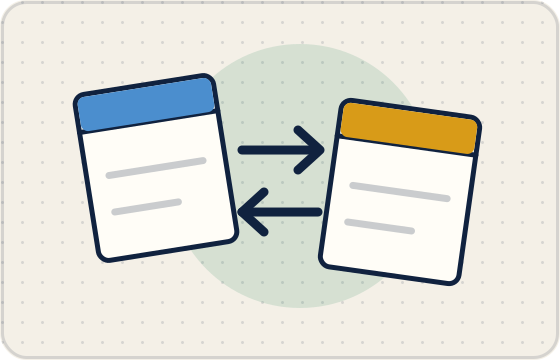
Players can negotiate property deals with one another for any mutually agreed price. Cash can be part of the transaction, and Get Out of Jail Free cards may also be transferred under classic rules.
What can players trade?
Players can negotiate property deals with one another for any mutually agreed price. Cash can be part of the transaction, and Get Out of Jail Free cards may also be transferred under classic rules.
The Bank does not set a market price for player-to-player deals. A property can be worth far more or less than its printed price depending on how it changes the balance of the board.
When can trades happen?
Trading is not limited to the moment somebody lands on a property. Players may negotiate deals during the game, subject to keeping play orderly and following the rules of the edition being used.
For online or competitive play, it helps to make every part of the offer explicit before either side accepts.
Can you trade a mortgaged property?
Yes. Mortgaged property can change hands, but the mortgage remains attached and creates obligations for the new owner under the mortgage rules. That future cost should be considered when valuing the deal.
What about properties with buildings?
A property from a color group cannot simply be sold to another player while buildings remain in that group. Buildings must first be sold back to the Bank according to the even-building rules.
This keeps houses and hotels inside the Bank-controlled building economy rather than allowing them to be transferred directly between players.
There is no official fair price
The printed purchase price is not a required trading price. Monopoly is a negotiation game, and strategic value is highly contextual. A cheap property that completes an opponent’s monopoly may be extraordinarily valuable to that opponent.
Think in terms of leverage: what new rents, building opportunities and bargaining positions does each side gain after the deal?
Avoid accidental kingmaking
A deal that dramatically strengthens one opponent can hurt every other player, including the person making the trade. Before accepting, model the immediate next move: can the recipient build several houses at once and create a lethal section of the board?
Cash compensation may look attractive but can disappear in a single rent payment. Long-term board control is often more important.
Make offers easy to understand
Good trades are concrete: name the exact properties, cash amount, cards and mortgage status. Avoid vague promises about future favors unless your group explicitly allows such informal agreements as a house rule.
For serious play, treat only the assets actually transferred as part of the enforceable transaction.
This page explains the standard rules commonly published for classic Monopoly editions. Individual editions can differ, so the rulebook supplied with your set is the final reference for edition-specific details.